Wednesday, January 26, 2011

Trend Micro To Pump Up Volume Business


Trend Micro aims to triple its volume business and has recently signed Neoteric Infomatique as national distributor.

“We never focused on driving the volume business in India till now, but we want to change that. Our strategies for volume business are designed for the long term,” said Amit Nath, Country Manager, India and Saarc, Trend Micro.

While on the consumer front Trend Micro has an abysmal market share, in the small business segment it has been doing reasonably well.

“In small business space we are currently adding close to 600-700 new customers every quarter. The plan is to more than triple it to 1,500-2,000 customers per quarter. The partnership with Neoteric, and the launch of the latest edition of Titanium and Worry Free range will help us get there,” he said.

Nath added that Titanium has been priced very competitively keeping in mind the price sensitivity of the Indian consumer. “Since its launch, Titanium has been getting rave reviews. We have priced it at Rs. 1,200 per user per year—which is very competitive in terms of price-performance, when compared to its peers. The new edition of Worry Free also includes several new features and is much lighter.”

Trend Micro plans to triple its partner base and has identified 25 tier-2 and tier-3 cities where it will soon embark on a major reseller enrollment program along with Neoteric. “We have lined up a series of events in these cities and have rolled out incentive programs for small-city resellers. The whole objective between now and end of March is to get our coverage right,” Nath said. The company has increased its marketing and channel development budget by almost 70 percent.

Tikona to Acquire HCL Infinet


Tikona Digital Networks has signed an agreement to acquire HCL Infinet, the wholly-owned subsidiary of HCL Infosystems. The acquisition is subject to regulatory approvals.
This is seen as a part of HCL Infosystem’s strategy to focus on its primary strengths of IT services and distribution.
“HCL Infinet is poised to take a different growth trajectory and we believe that its future plans will be better served by merging with Tikona who is a pure-play ISP and NLD service provider. HCL on the other hand plans to focus on its systems integration and product engineering business. This is a step towards further consolidating and strengthening our core business,” said Harsh Chitale, Chief Executive Officer, HCL Infosystems.
Tikona started as an ISP in 2008 serving the Mumbai market, and has been expanding across the country with services for both consumer and enterprise segments. Its primary focus is to offer wireless broadband connectivity. The company is also expanding its channel network to target the enterprise business.
HCL Infinet started its ISP and NLD operations in 2000 and holds the Class A ISP license. Its customer base largely consists of enterprise customers.

eMachine Brand Grew 100 Percent In 2010


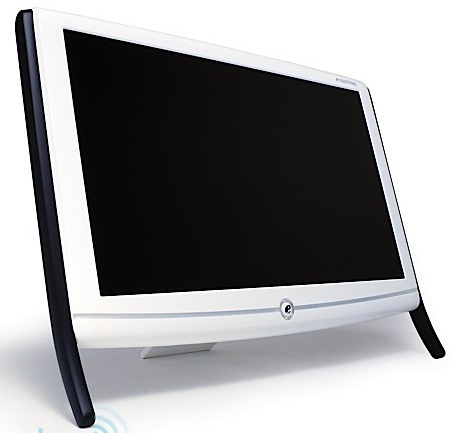
Acer’s eMachine brand targeted at the price-conscious consumer segment has witnessed a 100 percent YoY growth in 2010. It recorded average sales of 8,000 units per month during 2010, compared to an average of 4,000 units per month in 2009.

Commenting on the growth of the eMachine brand, S Rajendran, CMO, Acer India said, “The multi-brand strategy has worked quite well for us. The eMachine sales figures show that we have gone beyond our expectation and delivered more than the targeted figure. We hit an average of close to 8,000 units of eMachine notebooks and netbooks per month, while on the desktop front; we achieved an average monthly sale of 2,000 units.”

Rajendran said that the reasons for eMachine doing well are its focused distribution strategy and competitive pricing. “Exclusively distributing eMachine mobile PCs through Supertron have worked well. At its price point it’s been doing really well in the hinterlands. Also we floated several exciting schemes around the year which pushed up the sales.”

Highlighting the type of customer promotions Acer has been doing around eMachine, Rajendran said, “We currently have a scheme running in partnership with MTS in Rajasthan and Delhi. The eMachine model with N450 Atom with 1GB memory, 250GB hard drives and pre-bundled with a Windows 7 Starter edition is available for an MRP of Rs 12,999. Customers buying this with MTS broadband modem get Rs 2,000 cash back thus making the customer pricing at Rs 10,999. Schemes around eMachine have been local and target varying consumer demographics in different geographies.”

Acer expects the momentum to continue in 2011 as well. “eMachine will continue to be our focus in 2011 and we expect to sell more than 12,000 units per month in the year. Our strategy will be to further penetrate the upcountry market,” he claimed.

Rajendran said Acer isn’t averse to tapping the telco channel for eMachine to achieve its goal of doubling the market coverage. “We will continue with the same distribution model—Supertron will be exclusive for notebooks and netbooks while Salora, Ingram and Redington will distribute desktops. But we expect our distributors to tap the mobile channel,” he averred.

Rajendran said Acer will continue to have a limited product portfolio for eMachine mobile PCs. “Presently we have one model based on Intel Atom, two models on Pentium Dual Core and one model on Core i3. We don’t want to expand this portfolio. We want to keep things simple for our distributors and partners,” he informed.

Sony Launches Vaio YB


Sony India has launched the new Vaio YB range of notebooks based on AMD Vision CPU and GPU platforms, at a price tag starting Rs. 26,990 plus taxes.
Sporting a 11.6-inch display the Vaio YB is available in three colors of pink, silver and green.
The entry-level model comes with the AMD E-350 1.6GHz processor with Radeon HD 6310 graphics. It supports up to 4GB RAM, and ships with 500GB HDD.
The new range will be available across all Sony Centers and major large format outlets from February 2011 onwards.
With the launch of the Vaio YB range Sony has become the fourth PC vendor in the country to launch 11.6-inch notebooks based on AMD Vision platform. Lenovo, Toshiba and Dell already have models on the new platform.

Intel Eyes Channel for Development Tools


Next on Intel’s agenda are its development tools. Taking a leaf from its global strategy, plans are underway to build an alternate software reseller channel—outside its core OEM and system builder channel—to offer the business a much needed push.
Intel’s software line consists of development tools such as Intel Parallel Studio, vTune performance analyzer, C++ compiler and Fortran compiler, and embedded and mobile software from acquisition Wind River Systems’ portfolio. The vendor also offers some of its tools as plug-ins of extensions for Microsoft Visual Studio.
“Our development tools business aims to provide enhanced integrated development environment (IDE) for software programmers,” said Phil De La Zerda, Director, Worldwide Sales and Business Development, Intel Developer Product Division.
“Since India is the software hub of the world, we see a huge market potential.” According to De La Zerda, sectors such as finance, banking, engineering, oil and gas, and manufacturing are currently looking for High Performance Computing and Communication (HPCC) solutions. “Development tools are critical to business. We want developers to create software optimized for latest Intel processors,” he said. “We want them to embrace parallel computing and multithreading, and thereby better the performance of their software. As we acquire more customers, we are laying foundation for multi-core technology.”
Intel India has already reported wins in several large R&D and educational establishments such as C-DAC, IIT, IGIB, TIFR and NCRA. “We also have several IT services companies on our radar, and are investing heavily in events and seminars focused on HPCC,” said De La Zerda.
“We believe that every Microsoft Visual Studio licensee is a potential buyer, and we want our partners to go after them,” De La Zerda added.

DDR3 Prices Crash by 50 Percent in Last 45 Days


DDR3 prices have hit an all-time low following sluggish markets and liquidation of stocks by major Far Eastern distributors as the Chinese New Year approaches.
According to the recent report by DRAMExchange, the lowest price for 4GB DDR3 module quoted for the third week of January 2011 was around $32, which is approximately 50 percent lower than the price at the start of December 2010.
“Prices have been steadily dropping. It's a great time to upgrade or buy new memory,” said Suresh Purohit, Manager at Hyderabad-based DRAM India, a memory distributor, “Spot prices for a 4GB DDR3 module has dipped to less than Rs 2,000 from Rs 4,000 during the past 45 days.”
J Ramesh, Manager at Chennai-based Ralco Synergy added, “There is nothing new in the lows we are seeing in the DRAM market. It’s a cyclical trend that we have seen it in the past too. In Q3 and Q4 memory prices usually go up due to the Christmas season, and once that is over, it falls.” 
According to GA Mannan, Country Manager, Corsair India the other reason for the crash in prices is the transition that is happening from 45nm to 32nm manufacturing.
“Leading chip manufacturers have moved a large chunk of their memory manufacturing to 32nm fabs and hence are liquidating the 45nm inventory in order to move completely to the new and more efficient fabrication process,” opined Mannan.
Mannan sees memory prices firming up post the Chinese New Year, which is on February 3, 2011.

Kinfotech’s Kini Institutes Award


At the first ISODA Tech Summit 2011 being held in Bangkok, M Prabhakar Kini, Founder Managing Director of Bengaluru-based security and software solutions provider, Kinfotech announced the institution of the MP Kini Award for Business Excellence.

The award will be given away annually to a company for outstanding performance in the software reselling and solutions business. Kini presented the cheque of Rs 1,11,111 to Harinder Salwan, Secretary, ISODA for instituting the award, on the second day of the Tech Summit.

“The award will be given to a software partner who is rated the best not only in terms of business performance but also in terms of business practices and innovation. The process of selection of the winner will be done by an ISODA committee chaired by Kini. The winner will get a gold medal and a citation,” informed Kini.

The award for this year will be presented in April and ISODA members can nominate themselves or their peers for the same. “We will also call for nominations from outside ISODA membership and ask distributors and vendors to nominate their leading partners,” said he.

Commenting on his decision to institute the award, Kini said, “The software business has given me a lot—my first home, my first car, a lot of respect from vendors, peers and customers. This is my way of thanking the industry.”

Reports: Lenovo, NEC Discussing Joint PC Venture


Lenovo is reportedly in talks with Japanese hardware company NEC regarding a joint venture in the PC business.
According to a report from Reuters Lenovo and may launch a joint venture in PCs with NEC, the leading manufacturer in Japan's PC market.
Although it is unclear exactly what a partnership between the NEC and Chinese Lenovo would entail, NEC might allow Lenovo to become a diversified computer hardware maker. NEC's broad range of hardware product offerings includes thin clients, servers, supercomputers, projectors, monitors and point-of-sale systems.
Teaming up with NEC could help Lenovo expand in Japan. In addition, an alliance or joint venture with Lenovo would give NEC an opportunity to be a global player once again in the PC business; while NEC is a strong brand in Japan, the company is no longer a major worldwide PC manufacturer.
According to Nikkel Business Daily, a deal with Lenovo is not expected to prevent current NEC systems from coming to market as scheduled. However, it would add to the recent trend of Chinese companies venturing into the Japanese market as well as Lenovo's ambitious global PC strategy. Nikkel reports that, in the event of a deal, Lenovo is likely to invest in developing NEC's technology while seeking to expand its market share in Japan. Lenovo could not be reached for comment.
According to Gartner, Lenovo has the fourth-largest share of the global PC market with 10.1 percent, behind HP, Dell, and Acer. In 2010, Lenovo recorded the largest growth among OEMs worldwide, shipping an estimated 21.1 percent more units in the fourth quarter of 2010 than it sold in Q4 2009, according to IDC.

Targus Technologies on a Global Expansion Drive


Delhi-based enterprise VAR, Targus Technologies is geared up to expand its footprints in markets across the globe and will target Australia, Japan, and Africa in 2011.

The company began its operations in Singapore by setting up an office in H2 2010.
Targus has set up a separate division to drive international business. “We have outlined an aggressive global expansion strategy with an aim to garner $1 million in international revenues by end of FY2011-12. In 2010, the volume of revenue generated from Singapore office was $1 million. Our plan is to enter into partnerships with like-minded international companies in order to boost our market proliferation,” said Balwinder Singh, Director, Targus Technologies.
For its global customers, Targus will offer remote infrastructure management services and systems integration services. The company already has a state-of-the-art remote infrastructure management center in Gurgaon.